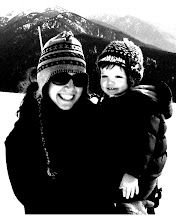
Sign outside the local hardware store: "Closed today for Jimmie Bob's funeral." That's a close second for "most obvious sign I'm not in Chicago anymore," right after this front-page headline in our local paper: "Duckling Shot with Blow Gun Recovering" (and the update a few days later, also on the front page: "Injured Duckling Returns Home to Mama"). I love living in a small town. It's especially comforting right now, knowing that if the morons* in Congress send us into default I'll be able to raise chickens in the backyard.
*We need to be fiscally responsible, let's start by not paying our bills ... GOD BLESS AMERICA.
Showing posts with label politics. Show all posts
Showing posts with label politics. Show all posts
8.01.2011


9.22.2010
O Cæsar! these things are beyond all use, And I do fear them
This is terrifying.
Yes, you read that link correctly. This is from Forbes. Not Rightwing Extremists' Weekly. Not even Fox News. Forbes. I am really frightened for us.
It may seem incredible to suggest that the anticolonial ideology of Barack Obama Sr. is espoused by his son, the President of the United States. That is what I am saying. From a very young age and through his formative years, Obama learned to see America as a force for global domination and destruction. He came to view America's military as an instrument of neocolonial occupation. He adopted his father's position that capitalism and free markets are code words for economic plunder. Obama grew to perceive the rich as an oppressive class, a kind of neocolonial power within America. In his worldview, profits are a measure of how effectively you have ripped off the rest of society, and America's power in the world is a measure of how selfishly it consumes the globe's resources and how ruthlessly it bullies and dominates the rest of the planet.
3.21.2010
volumes that I prize
Trent just wrote a post on books that have influenced him and I've decided to do the same. When he told me he was writing it I thought, I can't do that, it would be too hard to choose. But I decided after reading his that I wanted to try. I think my initial reluctance stemmed at least in part from my sadness that I've read so much less than I would like in recent years, which I prefer not to have to think about. But reading his made me think of several books I'd include in such a list.
1. Simone de Beauvoir's The Second Sex. To be honest I don't recall exactly what it was that affected me so profoundly when I read this in college. But I do recall being shattered by it, and thinking that it should be required reading for every woman. I think--reverse engineering my impressions--it opened my eyes to how deeply my concept of self was affected by my sex and gender, and therefore how much it was derived from the male perspective, which necessarily defines me in relation to men.
2. William S. Burroughs' Naked Lunch. This book has so much power and rawness. I think I measured every book I read against it for years afterward. It is hard to believe that words on a page can jump up and shake you by the throat the way this book does.
3. Margaret Atwood's The Handmaid's Tale. I think what affected me most about this book was how surprisingly plausible it seemed. Unfortunately. Her description of how it happened that slowly women became entirely subjugated--again--was frighteningly real.
4. Anne McCaffrey's Pern series. Dragons! Taking a break from capital-L literature, these books are pure escapist fantasy. And that's exactly why I include them here. I read this series during an extremely difficult period of my life, and I'm not sure I would have survived it without them.
5. Chaucer's Canterbury Tales. Back to highbrow. Except not really--Chaucer was a sort of lowbrow pioneer because he wrote in English at a time when English was considered the language of the peasants, and serious poetry and prose was written only in French. Plus he wrote about common people, and his humor could be very coarse. In The Miller's Tale, a woman's lover tricks his rival into kissing his naked behind, and then farts in his face. But I include the Tales here because when I read them (after I got used to the archaic language -- it doesn't take that long to get over that hump and start enjoying them, so please don't read a "translation," you will seriously miss out) I was blown away by how alive his characters were. All these years after he wrote them, the voluble color with which they speak from the page is truly inspiring.
6. Adam Smith's Wealth of Nations. This book made me understand why capitalism by its very nature has to take over the world and push everyone and everything to do more, make more, consume more.
7. Karl Marx and Friedrich Engels' The Communist Manifesto. I read this right after Smith, as part of the Great Books curriculum at the University of Chicago. (All colleges should follow this model. This is the third book on my list that I read as past of that curriculum, and there are at least a dozen more I could include. Can you even remember the titles of that many books you read in college?) I was reeling from the capitalism=cancer vision I got from Smith, and looking for an alternative. And unfortunately, this book didn't offer me one. What I learned from it is that the most popular alternative to capitalism anyone's come up with doesn't have a chance of ever being put into practice on a large scale because it would require that a small group of people seize power and then, after holding it for a while through a transition period, voluntarily give it up. Marx and Engels didn't explain how that was going to work, and history (and human nature) tells us that it doesn't.
8. Graham Greene's The Heart of the Matter. This book made me understand Catholicism. One scene in particular crystallized it for me: the main character is about to do something that is a sin for reasons that I would call a technicality, and the image in his mind is that he is stomping on the face of baby Jesus. Amazing.
9. Jane Austen's Complete Works. Cheating, I know. But I don't want to single out one of her plots because that would miss the point. It's the way dear Jane writes about people that constitutes her influence on me. A few deft strokes of keenly observed mockery, and voila -- a fully-formed character. Gorgeous.
10. Laura Ingalls Wilder's Little Town on the Prairie. I could put the whole series here, because I reread them all repeatedly and generally obsessed upon and worshipped Laura throughout my formative years. But Little Town was my favorite, probably because it was the one in which Laura's future husband courted her. I'm sure it had a significant impact on my ideas about love and romance, for better or worse.
1. Simone de Beauvoir's The Second Sex. To be honest I don't recall exactly what it was that affected me so profoundly when I read this in college. But I do recall being shattered by it, and thinking that it should be required reading for every woman. I think--reverse engineering my impressions--it opened my eyes to how deeply my concept of self was affected by my sex and gender, and therefore how much it was derived from the male perspective, which necessarily defines me in relation to men.
2. William S. Burroughs' Naked Lunch. This book has so much power and rawness. I think I measured every book I read against it for years afterward. It is hard to believe that words on a page can jump up and shake you by the throat the way this book does.
3. Margaret Atwood's The Handmaid's Tale. I think what affected me most about this book was how surprisingly plausible it seemed. Unfortunately. Her description of how it happened that slowly women became entirely subjugated--again--was frighteningly real.
4. Anne McCaffrey's Pern series. Dragons! Taking a break from capital-L literature, these books are pure escapist fantasy. And that's exactly why I include them here. I read this series during an extremely difficult period of my life, and I'm not sure I would have survived it without them.
5. Chaucer's Canterbury Tales. Back to highbrow. Except not really--Chaucer was a sort of lowbrow pioneer because he wrote in English at a time when English was considered the language of the peasants, and serious poetry and prose was written only in French. Plus he wrote about common people, and his humor could be very coarse. In The Miller's Tale, a woman's lover tricks his rival into kissing his naked behind, and then farts in his face. But I include the Tales here because when I read them (after I got used to the archaic language -- it doesn't take that long to get over that hump and start enjoying them, so please don't read a "translation," you will seriously miss out) I was blown away by how alive his characters were. All these years after he wrote them, the voluble color with which they speak from the page is truly inspiring.
6. Adam Smith's Wealth of Nations. This book made me understand why capitalism by its very nature has to take over the world and push everyone and everything to do more, make more, consume more.
7. Karl Marx and Friedrich Engels' The Communist Manifesto. I read this right after Smith, as part of the Great Books curriculum at the University of Chicago. (All colleges should follow this model. This is the third book on my list that I read as past of that curriculum, and there are at least a dozen more I could include. Can you even remember the titles of that many books you read in college?) I was reeling from the capitalism=cancer vision I got from Smith, and looking for an alternative. And unfortunately, this book didn't offer me one. What I learned from it is that the most popular alternative to capitalism anyone's come up with doesn't have a chance of ever being put into practice on a large scale because it would require that a small group of people seize power and then, after holding it for a while through a transition period, voluntarily give it up. Marx and Engels didn't explain how that was going to work, and history (and human nature) tells us that it doesn't.
8. Graham Greene's The Heart of the Matter. This book made me understand Catholicism. One scene in particular crystallized it for me: the main character is about to do something that is a sin for reasons that I would call a technicality, and the image in his mind is that he is stomping on the face of baby Jesus. Amazing.
9. Jane Austen's Complete Works. Cheating, I know. But I don't want to single out one of her plots because that would miss the point. It's the way dear Jane writes about people that constitutes her influence on me. A few deft strokes of keenly observed mockery, and voila -- a fully-formed character. Gorgeous.
10. Laura Ingalls Wilder's Little Town on the Prairie. I could put the whole series here, because I reread them all repeatedly and generally obsessed upon and worshipped Laura throughout my formative years. But Little Town was my favorite, probably because it was the one in which Laura's future husband courted her. I'm sure it had a significant impact on my ideas about love and romance, for better or worse.
1.03.2010
If you think you are a fan of the federal system of government ...
... try spending your vacation reading every state law on a particular subject and analyzing the key distinctions. Then see how you feel about having 50 different laws about the same d-mn thing in the same d--mn country. Ricockulous, that's what it is.
2.09.2009
Blessed Is the Fruit of Thy Womb
One of the strangest things about pregnancy was becoming unpregnant. That's true for many reasons, but the one I want to talk about now is the way the focus suddenly changed from me to my baby. When I was pregnant, I was the center of attention and the focus of much solicitude. When the baby became physically separated from me, the attention shifted to him and I realized a fairly obvious thing: all the attention I got when I was pregnant was not really for me, it was for him.
This might make sense, but it feels very wrong. It makes me feel that all those months I was being treated as a glorified incubator, a vessel that once empty loses its significance. I suddenly "get" in a meaningful way a large swath of feminist thought that was previously merely theoretical. The upshot is that pregnancy and birth have made me shift a little more toward the pro-choice side of the abortion question. That seems pretty ironic.
(I was essentially on the fence before--I find some arguments on both sides to be very compelling, and mostly I just find it outrageous that people can be so strident about something so full of deep emotional conflicts. Which actually put me more on the pro-choice side, but just barely.)
I don't know why I decided to post about this after midnight when I have to go to work in the morning, but there it is. Now I have to go to bed.
This might make sense, but it feels very wrong. It makes me feel that all those months I was being treated as a glorified incubator, a vessel that once empty loses its significance. I suddenly "get" in a meaningful way a large swath of feminist thought that was previously merely theoretical. The upshot is that pregnancy and birth have made me shift a little more toward the pro-choice side of the abortion question. That seems pretty ironic.
(I was essentially on the fence before--I find some arguments on both sides to be very compelling, and mostly I just find it outrageous that people can be so strident about something so full of deep emotional conflicts. Which actually put me more on the pro-choice side, but just barely.)
I don't know why I decided to post about this after midnight when I have to go to work in the morning, but there it is. Now I have to go to bed.
1.24.2009
Sweet Home Chicago, Part III
(Daley calling Blagojevich "cuckoo")
Chicago politics are endlessly entertaining.
1.20.2009
Free at Last
This quote by Barack from a 1996 interview with the Obamas is such an insightful statement about marriage I wanted to share it:
And then what sustains our relationship is I’m extremely happy with her, and part of it has to do with the fact that she is at once completely familiar to me, so that I can be myself and she knows me very well and I trust her completely, but at the same time she is also a complete mystery to me in some ways. And there are times when we are lying in bed and I look over and sort of have a start. Because I realize here is this other person who is separate and different and has different memories and backgrounds and thoughts and feelings. It’s that tension between familiarity and mystery that makes for something strong, because, even as you build a life of trust and comfort and mutual support, you retain some sense of surprise or wonder about the other person.
Thanks to the New Yorker (click to see the great accompanying photo of the Obamas at home in Hyde Park in 96) for publishing it and Broadsheet for leading me to it.
I can't even begin to express how excited I am today that this man is our president, for so many, many reasons. I will admit to a twinge of regret when Hillary arrive at the ceremony, thinking about how it would feel to finally be witnessing a woman become president, but that day will come too. I'm thrilled today for black Americans, and for all of us as we take this step toward healing the still-gaping wound that is race relations in America. I'm ecstatic and relieved and yet still a bit angry to finally be rid of the worst president in American history, whose destructive legacy we are only just beginning to understand. I'm proud and gratified and yet even now still surprised to welcome a politician who I can actually admire and who inspires me. He has a hard road ahead of him, and I can't wait to see him lead us down it.
And then what sustains our relationship is I’m extremely happy with her, and part of it has to do with the fact that she is at once completely familiar to me, so that I can be myself and she knows me very well and I trust her completely, but at the same time she is also a complete mystery to me in some ways. And there are times when we are lying in bed and I look over and sort of have a start. Because I realize here is this other person who is separate and different and has different memories and backgrounds and thoughts and feelings. It’s that tension between familiarity and mystery that makes for something strong, because, even as you build a life of trust and comfort and mutual support, you retain some sense of surprise or wonder about the other person.
Thanks to the New Yorker (click to see the great accompanying photo of the Obamas at home in Hyde Park in 96) for publishing it and Broadsheet for leading me to it.
I can't even begin to express how excited I am today that this man is our president, for so many, many reasons. I will admit to a twinge of regret when Hillary arrive at the ceremony, thinking about how it would feel to finally be witnessing a woman become president, but that day will come too. I'm thrilled today for black Americans, and for all of us as we take this step toward healing the still-gaping wound that is race relations in America. I'm ecstatic and relieved and yet still a bit angry to finally be rid of the worst president in American history, whose destructive legacy we are only just beginning to understand. I'm proud and gratified and yet even now still surprised to welcome a politician who I can actually admire and who inspires me. He has a hard road ahead of him, and I can't wait to see him lead us down it.
12.16.2008
Quarterbreed
My husband's cousin told us to pick up an application for Nugget to be made a member of their tribe, the Makah, when we were visiting last week; she said it as if it were a given that we would submit such an application. I appreciated her confidence and warmth, but I worry about making such an application, and I am pretty sure my husband's feelings about it are even more fraught.
If you aren't born on the Makah reservation, but you have some minimum amount of "blood," you can become a member if the tribe votes to admit you, if I understand it correctly. But my son will almost certainly look white, and he will probably have a privileged urban upbringing far from the reservation. I'm not sure he can gain acceptance from the tribe, and I'm not even sure he should. I want to take him there as often as possible, to spend time with his family and to understand their (his?) culture, but I hate that he's sure to feel the pain of someone who belongs a little but not enough.
My husband, who doesn't really talk about it (or his feelings generally), is the son of a Makah woman and a white man, but he looks white and grew up in suburban L.A. It makes me angry sometimes, especially when he was devoting his legal career to representing tribes, that he is not always accepted in the native community because of the color of his skin or the quantum of his blood. I can understand somewhat that people who grew up with poverty and the other ills that often affect reservations, or who experience discrimination based on their appearance, would resent having to share their hard-earned identity with someone who did not suffer similarly. But shouldn't that identity be defined by positive things, as well? I know these are complicated issues that don't have any easy answers. It's from that emotional morass that I would like to protect my son, if I could. But I can't, and I don't want to, because doing so would rob him of the good things about it. Our son will be even further removed from the Makah identity than his dad; will that make it easier or harder, I wonder?
Of course, I'll want to shield him from "my people," too. At the rehearsal dinner before I married Trent, a--probably somewhat drunk--friend of my parents' told me excitedly, "It's so great that he's Native American! It will help your kids get into college!" Well-meant but definitely wince-worthy. Will my son be subject to whispers that he didn't earn what he received? I've always been a little conflicted on the subject of affirmative action, not least because of the stigma problem. Now I worry that it will affect my son. On the other hand, maybe it will help him get into college. Am I allowed to be pleased by that? Probably not, since another of the problems with affirmative action that I've always stumbled upon is that it benefits those who don't need it as much as it benefits those who do--and my son, the child of two lawyers, would undoubtedly be one of the unintentional beneficiaries.
At the moment, though, the only pain Nugget is feeling is from teething,which seems to have come very early. Poor little man. And poor me, too, as I doubt I'll get much sleep tonight. And poor Trent, because if I don't get to sleep, I'll be damned if he does.
p.s. I ran this post by my husband before publishing it, and he tried to suggest that the part about not talking about his feelings was inaccurate, but he couldn't keep a straight face long enough to get it out.
If you aren't born on the Makah reservation, but you have some minimum amount of "blood," you can become a member if the tribe votes to admit you, if I understand it correctly. But my son will almost certainly look white, and he will probably have a privileged urban upbringing far from the reservation. I'm not sure he can gain acceptance from the tribe, and I'm not even sure he should. I want to take him there as often as possible, to spend time with his family and to understand their (his?) culture, but I hate that he's sure to feel the pain of someone who belongs a little but not enough.
My husband, who doesn't really talk about it (or his feelings generally), is the son of a Makah woman and a white man, but he looks white and grew up in suburban L.A. It makes me angry sometimes, especially when he was devoting his legal career to representing tribes, that he is not always accepted in the native community because of the color of his skin or the quantum of his blood. I can understand somewhat that people who grew up with poverty and the other ills that often affect reservations, or who experience discrimination based on their appearance, would resent having to share their hard-earned identity with someone who did not suffer similarly. But shouldn't that identity be defined by positive things, as well? I know these are complicated issues that don't have any easy answers. It's from that emotional morass that I would like to protect my son, if I could. But I can't, and I don't want to, because doing so would rob him of the good things about it. Our son will be even further removed from the Makah identity than his dad; will that make it easier or harder, I wonder?
Of course, I'll want to shield him from "my people," too. At the rehearsal dinner before I married Trent, a--probably somewhat drunk--friend of my parents' told me excitedly, "It's so great that he's Native American! It will help your kids get into college!" Well-meant but definitely wince-worthy. Will my son be subject to whispers that he didn't earn what he received? I've always been a little conflicted on the subject of affirmative action, not least because of the stigma problem. Now I worry that it will affect my son. On the other hand, maybe it will help him get into college. Am I allowed to be pleased by that? Probably not, since another of the problems with affirmative action that I've always stumbled upon is that it benefits those who don't need it as much as it benefits those who do--and my son, the child of two lawyers, would undoubtedly be one of the unintentional beneficiaries.
At the moment, though, the only pain Nugget is feeling is from teething,which seems to have come very early. Poor little man. And poor me, too, as I doubt I'll get much sleep tonight. And poor Trent, because if I don't get to sleep, I'll be damned if he does.
p.s. I ran this post by my husband before publishing it, and he tried to suggest that the part about not talking about his feelings was inaccurate, but he couldn't keep a straight face long enough to get it out.
Subscribe to:
Posts (Atom)